

What Microsoft Copilot Actually Does (And What It Doesn’t) in 2026


Microsoft Copilot • Practical Guide • 2026

What Microsoft Copilot Actually Does (And What It Doesn’t) in 2026

If you’ve seen a Copilot demo and thought “This is magic,” you’re not alone. But the fastest way to get value
(and avoid a painful rollout) is to understand what Copilot truly does, what it can’t do, and what has to be
in place behind the scenes for results to feel reliable—not random.

⏱️ Read time: ~10–12 minutes
🎯 Audience: IT leaders, ops leaders, PMO, M365 owners
🔎 Focus: Expectations, readiness, governance
Copilot is not “AI Google.”It works within your Microsoft 365 content and permissions.
Copilot is not an admin.It won’t fix your messy libraries, sprawl, or access issues.
Copilot is an accelerator.When your content + governance are solid, it becomes a force multiplier.

1) What Copilot is (in plain English)

Microsoft Copilot is a set of AI features embedded across the Microsoft ecosystem—especially Microsoft 365 apps
like Word, Excel, PowerPoint, Outlook, Teams, and SharePoint. In day-to-day work, Copilot is primarily used to:

  • Generate drafts (emails, documents, summaries, proposals, meeting recaps)
  • Transform content (rewrite, shorten, adjust tone, create outlines, convert notes into plans)
  • Analyze and reason over business data (especially in Excel and reporting scenarios)
  • Find and synthesize knowledge across M365 content (documents, chats, pages, and files)
Think of Copilot as a “work assistant” that can read and write on your behalf—but only using the tools
and information it can access. It’s not a replacement for your business owners, and it doesn’t automatically make
your environment “organized.” It uses what you already have.

That last sentence is where expectations often break. Many organizations assume Copilot will instantly “clean up”
knowledge, unify policies, or locate perfect answers in a messy tenant. In practice, Copilot amplifies what’s already
true about your environment—both the good and the bad.

2) What Copilot actually does well

A) Drafting and editing (the obvious win)

Copilot’s most immediate value is speed. You give it context (“write a project update for leadership based on these bullets”),
and it produces a strong starting point. That’s not just about saving time; it changes how teams work:
fewer blank-page moments, faster first drafts, and more time spent refining (the “human” part).

Pro tip: Treat Copilot outputs as drafts. Your organization gets the most value when you
establish a lightweight review process (even if it’s just “read it once before sending”).

B) Summarization across documents and conversations

Summaries are where Copilot often becomes addictive. It can condense long policy docs, meeting notes, or messy
threads into “what happened, what decisions were made, and what’s next.” This is especially valuable for:

  • Executives who need quick context
  • Project managers collecting action items
  • Operations teams tracking changes and approvals
  • IT teams translating technical details for business stakeholders

C) Turning unstructured content into structured output

A powerful (often overlooked) Copilot benefit is converting informal notes into formal structure.
For example, it can convert brainstorm bullets into:

  • A project plan with phases and milestones
  • A stakeholder communication draft
  • A risk log and mitigation plan
  • A training outline with role-based modules

D) Helping users find “the right thing” faster

Copilot can speed up knowledge discovery—particularly when SharePoint and Teams content is well-tagged and
housed in logical sites and libraries. Users can ask natural-language questions like:

  • “What’s our PTO policy and what’s the approval process?”
  • “Summarize the latest client SOW and highlight key deliverables.”
  • “What are the risks we identified in last month’s governance assessment?”
Copilot becomes most valuable when it’s connected to well-governed SharePoint content—especially intranet
pages, policy libraries, departmental knowledge bases, and “source-of-truth” document repositories. [1](https://www.newpeaksolutions.com/consulting/sharepoint/)

3) What Copilot does NOT do (common misconceptions)

✅ What Copilot CAN do

  • Draft content from your prompts and available context
  • Summarize and extract action items
  • Rewrite for tone, clarity, and brevity
  • Help analyze data and create outlines
  • Surface relevant content the user can access

❌ What Copilot CANNOT do

  • Magically fix messy SharePoint architecture
  • Invent authoritative answers when content doesn’t exist
  • Know “tribal knowledge” that isn’t documented
  • Automatically enforce governance policies
  • Replace human judgment or approval processes

Myth #1: “Copilot will clean up our SharePoint sprawl.”

Copilot doesn’t reorganize your tenant. If your organization has 15 versions of the same policy scattered across
Teams chats, email attachments, and random libraries, Copilot may surface one of them—but it can’t guarantee it’s
the latest or authoritative version. That’s an information architecture and governance issue, not an AI issue.

Myth #2: “Copilot is a magic search engine that always finds the right file.”

Copilot can help users discover content faster, but it’s still constrained by the content quality and how it’s stored.
If files have vague names (e.g., Final_v7_revised2.docx), no metadata, and no clear
“source-of-truth” location, Copilot’s confidence may not match your business expectations.

Myth #3: “Copilot will know our business processes automatically.”

Copilot learns from what it can reference. If your onboarding process is undocumented, if approvals happen “in someone’s head,”
or if your SOPs are outdated, Copilot won’t reliably produce correct steps. It can draft a process, but it can’t certify it.

Myth #4: “Copilot is a replacement for training.”

Teams still need enablement: what to ask, how to prompt, where to store content, and how to review results.
In most organizations, “prompt literacy” becomes a real skill—and it’s not evenly distributed.

4) Why Copilot results vary: the “quality in, quality out” reality

If you’ve heard someone say “Copilot is amazing” while someone else says “it’s useless,” that’s common—and it’s usually
because they’re working in different content conditions. Here are the four biggest drivers of Copilot quality:

1) Information architecture (where content lives)

Copilot works best when your organization has clear “homes” for key content: a policy library, departmental knowledge sites,
and structured project spaces. When everything is scattered, Copilot has to guess what you meant—and guesswork is where
user trust erodes.

2) Content quality and freshness (is it accurate?)

Old documents don’t become correct because AI can read them. In fact, AI can amplify outdated guidance by making it sound
confident. A lightweight content lifecycle (owners, review dates, archiving) dramatically improves Copilot outputs.

3) Permissions and oversharing (who can see what?)

Copilot doesn’t “break security,” but it does highlight security realities. If many users have broad access to content they
shouldn’t, Copilot can surface that content to them—because they already had access. A Copilot rollout often becomes the moment
organizations finally address oversharing.

4) Prompt clarity (how users ask)

Copilot is sensitive to context. “Write a project update” produces generic content. But a prompt like:
Write a 6-bullet executive update about Project Atlas. Include progress, risks, decisions needed, and next steps. Use a confident but calm tone.
will produce dramatically better results. This is why quick role-based training pays off fast.

A simple rule: If you want better Copilot answers, invest in better “inputs”:
structured content + clean permissions + clear prompts.

5) Copilot vs Copilot Studio: when you need more than out-of-the-box

Out-of-the-box Copilot is great for individual productivity. But many organizations want something more specific:
a Copilot experience that answers “our company’s” questions with consistent, curated results.

When standard Copilot is enough

  • Drafting, summarization, rewriting
  • General knowledge discovery across well-managed content
  • Individual time savings in day-to-day communication

When Copilot Studio (or a tailored experience) makes sense

  • You want an IT/HR “help bot” grounded in approved documents
  • You need curated sources (“only use the policy library, not random files”)
  • You want repeatable workflows (e.g., onboarding steps, ticket triage)
  • You need integrations with line-of-business tools or structured databases
Many organizations start with out-of-the-box Copilot, then expand into custom copilots as they identify high-value,
repeatable use cases (IT support, HR questions, onboarding, proposal generation, governance Q&A).

6) A practical rollout approach that avoids disappointment

The best Copilot rollouts feel “boring” behind the scenes—because the fundamentals are handled early. Here’s a proven,
practical approach you can apply whether you’re rolling out to 20 users or 2,000.

Step 1: Define your top 5 use cases (before you buy more licenses)

Don’t start with “everyone gets Copilot.” Start with where you expect measurable lift. Examples:
executive updates, PMO reporting, meeting recaps, policy Q&A, sales proposals, onboarding.

Step 2: Fix the “source of truth” problem

Identify where your authoritative documents live. Consolidate duplicates. Create owners. Even a small amount of cleanup
makes Copilot feel far more accurate.

Step 3: Do a permissions sanity check (oversharing is the silent killer)

Copilot will increase visibility into content users already can access. If your permission model is too broad,
this is the time to address it.

Step 4: Run a targeted pilot with success criteria

Choose a small group (e.g., Operations + PMO + IT) and define success metrics:
time saved per week, reduction in meeting follow-ups, faster document creation cycles, improved knowledge findability.

Step 5: Train users on prompting and “review habits”

Copilot works best when users know how to ask, how to refine, and how to validate. A 60–90 minute role-based session
often produces immediate adoption improvements.

Want a Copilot rollout that actually sticks?

If you want help planning Copilot success (use cases, SharePoint structure, permissions, governance, and adoption),
we can run a short readiness workshop and deliver a practical rollout plan.

FAQ: questions clients ask before they buy

Is Copilot “safe” for sensitive company data?

Copilot generally respects the permissions model in your tenant—meaning it can only surface content a user can already access.
The real risk is often existing oversharing. A Copilot rollout is a great moment to audit and tighten permissions,
especially for sensitive libraries and broad-access sites.

Why does Copilot sometimes feel inconsistent?

Inconsistency usually comes from inconsistent inputs: duplicated documents, unclear sources of truth, weak metadata,
or broad permissions. Improving content structure and governance typically improves Copilot accuracy far more than “tuning”
the AI.

Will Copilot replace roles like project managers, analysts, or writers?

In most organizations, Copilot functions as an accelerator. It reduces time spent drafting, summarizing, and formatting—
but it does not replace decision-making, stakeholder alignment, approval workflows, or domain expertise.

What’s the fastest way to get measurable ROI?

Start with 3–5 repeatable, high-volume use cases (executive updates, meeting summaries, proposal drafting, policy Q&A),
run a pilot, and measure time saved. Then expand to the next wave of users once your “source of truth” content is in better
shape.

What should we fix first: content structure or training?

Do both, but prioritize “source of truth” content and permissions first. Even great prompting can’t reliably overcome
messy content foundations. Once the basics are handled, training drives adoption quickly.

Next in this series: “Is Your Microsoft 365 Tenant Ready for Copilot? A Practical Readiness Checklist”
(we’ll publish a downloadable checklist and a step-by-step readiness approach).

If you’d like, we can tailor this post with your client stories, your preferred service positioning, and internal links
to your key consulting pages for stronger SEO and conversion. [1](https://www.newpeaksolutions.com/consulting/sharepoint/)

7 High‑Value Microsoft Copilot Use Cases Clients Ask for First


7 High‑Value Microsoft Copilot Use Cases Clients Ask for First

Practical, high‑impact ways organizations are using Microsoft Copilot to reduce friction,
improve productivity, and elevate everyday work across Microsoft 365.

Elevate Your Business. Reach New Peaks.

Microsoft Copilot has moved well beyond experimentation. Today, it is a business‑ready capability embedded across Microsoft 365 that helps organizations work faster, think more clearly, and reduce unnecessary manual effort.

Yet successful Copilot adoption rarely begins with broad, abstract goals. When organizations contact New Peak Solutions, they typically arrive with specific, familiar challenges: employees struggle to find the right information, leaders are overwhelmed by meetings, HR and IT teams answer the same questions repeatedly, and project reporting consumes far too much time.

Based on real client demand and hands‑on delivery experience, these are the seven Microsoft Copilot use cases organizations ask for first. They consistently deliver early wins, build confidence in AI, and create a strong foundation for long‑term transformation.


1. SharePoint Knowledge Search Copilot

The most common Copilot request we hear is also the most universal:

“We know the information exists — we just can’t find it when we need it.”

Most organizations already have years of content stored in SharePoint: policies, procedures, onboarding materials, templates, project documentation, and internal guidance. Over time, however, content spreads across sites, ownership becomes unclear, and employees lose confidence in what is current or authoritative.

A SharePoint knowledge search Copilot allows employees to ask natural‑language questions and receive clear, permission‑aware answers grounded in approved content. Instead of searching folders or interrupting colleagues, users can simply ask:

  • What is our remote or hybrid work policy?
  • Where is the latest vendor onboarding checklist?
  • What is the approved process for requesting new software?

This use case is often the first Copilot organizations deploy because it immediately improves productivity across every department without requiring behavior change or complex training.


2. Executive Meeting Summaries & Action Tracking

Executives do not need more meetings. They need clearer outcomes and better follow‑through.

Microsoft Copilot helps transform meetings into structured, actionable outputs by generating concise summaries, capturing key decisions, and highlighting next steps. Rather than manually reviewing notes or reconstructing conversations days later, leaders receive consistent, readable outputs immediately after each meeting.

  • Meeting summaries that capture the “why,” not just the “what”
  • Clear decisions and rationale
  • Action items with ownership
  • Draft follow‑up communications

This use case often drives early executive buy‑in because the value is tangible and immediate. Time is saved, accountability improves, and leadership alignment becomes easier to maintain.

Schedule a Microsoft Copilot Consultation

Start with a conversation. We’ll discuss your goals, your Microsoft 365 environment, and where Copilot can deliver the greatest impact.


Email info@newpeaksolutions.com to schedule a consultation


3. HR Policy & Employee Self‑Service Copilots

HR teams are essential to employee experience, yet much of their time is spent responding to repetitive questions. A Copilot‑powered HR assistant enables employees to self‑serve accurate answers while ensuring consistency and compliance.

Common scenarios include:

  • Benefits enrollment and eligibility questions
  • PTO and leave policies
  • Employee handbook access
  • Onboarding guidance for new hires

The result is a better employee experience, fewer interruptions, and more time for HR teams to focus on strategic initiatives rather than administrative overhead.


4. IT Helpdesk & Internal Support Copilots

IT teams handle a steady stream of predictable requests. While these requests are necessary, they consume time that could be spent on higher‑value work.

An IT support Copilot can assist by:

  • Answering common IT questions
  • Guiding basic troubleshooting steps
  • Explaining standard IT processes
  • Helping route issues correctly

This reduces ticket volume, improves response times, and enhances the employee support experience without replacing IT expertise.


5. PMO & Project Reporting Copilots

Project reporting often requires manually consolidating updates from spreadsheets, emails, Teams messages, and slide decks. This process is time‑consuming and inconsistent.

Copilot helps PMOs and project teams generate executive‑ready reporting quickly by summarizing project status, highlighting risks, and identifying blockers.

  • Clear status summaries
  • Risk and dependency visibility
  • Decision tracking

Because project reporting is highly visible to leadership, improvements here build trust in Copilot adoption early.

Request a Copilot Discovery & Assessment

Identify high‑impact Copilot use cases, readiness gaps, and a clear starting point aligned to your business goals.


Email us to request an assessment


6. Finance & Operations Process Assistants

Finance and operations teams manage critical processes that employees interact with infrequently. When people are unsure what to do, delays and errors follow.

Copilot can provide step‑by‑step guidance for:

  • Expense and reimbursement rules
  • Procurement and vendor onboarding
  • Budgeting timelines and approvals
  • Standard operating procedures

This reduces rework, improves compliance, and helps teams execute with confidence.


7. Cross‑Department “How‑Do‑I” Copilots

As organizations scale, knowledge becomes siloed. Employees often do not know where to go or who to ask to get things done.

Cross‑department copilots help answer everyday questions such as:

  • How do I request marketing or design support?
  • Who approves this type of request?
  • Where is the latest template or form?

These copilots reduce friction, accelerate onboarding, and make the organization easier to navigate.


Copilot Readiness Checklist

  • Clear sources of truth for policies and processes
  • Well‑governed SharePoint permissions
  • Defined pilot group and success metrics
  • Enablement and training plan


Email us to request the full Copilot readiness checklist


Final Thought

These are the first copilots we typically build for new clients because they deliver immediate value, accelerate adoption, and establish a strong foundation for long‑term AI success.


Contact New Peak Solutions

to discuss the right starting point for your organization.

New Peak Solutions Now Featured on Clutch


New Peak Solutions Now Featured on Clutch

The difference between digital solutions and quality digital solutions is a distinction that many businesses fail to acknowledge, but it is an important one. The bulk of business-client interactions have shafted to digital, and largely mobile platforms, which is a development that smart firms have recognized, and one that the brightest firms have been keen to take advantage of. We are a team of developers, designers, and innovators, offering custom solutions for firms of all shapes and sizes. We strive to provide our clients with the very best, and in a pleasant turn of events, they have returned the favor.

We are excited to share that we are now featured on Clutch! Clutch is a platform for B2B ratings and reviews, with analysts who collect in depth market research and conduct verified client reviews for firms across dozens of industries. We can be found on their directory of the top ECM consultants, business consultants, and blockchain developers in Chicago. Not only are we featured, we have also received our first client review.

When asked what they found impressive about New Peak Solutions, an application engineer for a law firm we worked with remarked,

“They’re a professional and personable team that has the required knowledge we needed and understood what the expectations and end-goal were . . . They understood exactly what was needed for the project and what they had to do to design the database and UI to make it simple yet effective for attorneys.”

We always welcome client feedback, positive or negative, and we recognize the opportunity for growth that it offers. Although we only have one review so far, we cannot wait to see what else our clients have to say in order to improve ourselves as a team.

In addition to our presence on Clutch, we are now featured on The Manifest. The Manifest is a resource to help firms identify and address their business challenges, offering industry insights, how-to guides, and recommendations of top service providers. We were featured as one of the top app developers in Chicago, highlighting our talents as a multi-faceted team of experts. We appreciate this boost to our reputation, but we don’t just want people to say that our work is quality, we want them to see it. That is exactly why we have created a profile on Visual Objects, a site for firms to share their work with prospective clients.

Thank you to our clients, and everyone on the team, this was a group effort and we all deserve to celebrate milestones like these. Hard work got us here, and we cannot wait to keep pushing forward to see what else will come.

SharePoint Company


SharePoint Company- New Peak Solutions

WhiteThis page has moved here.

Metadata Part 2

by Eugene Clynes in Uncategorized Comments: 0

Office 365: What is it? Where is it Going?

by Nicole Spiewak in Uncategorized Comments: 0

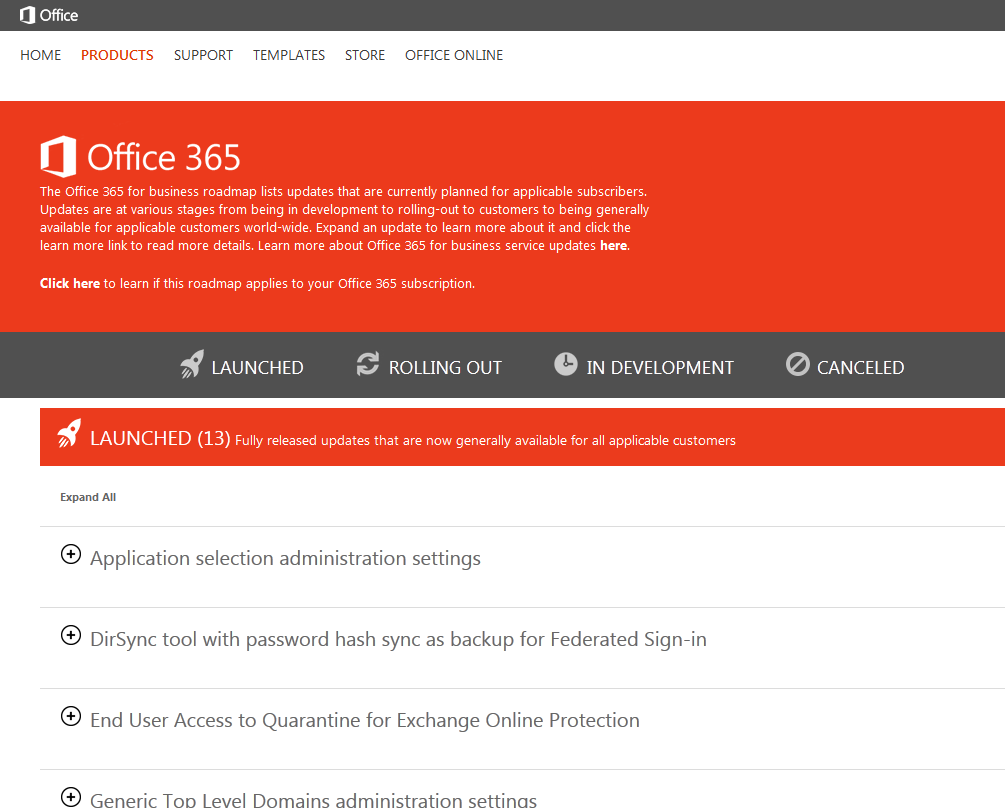
Recently there have been some improvements in how Microsoft is communicating the current and future state of Office 365.  I thought I would share a couple of useful links.

  1. Check out this Garage Series video for an overview of what Office 365 is and where it’s going.
  2. If you’d like a more in-depth picture of everything that’s currently on the roadmap, read this article.  It includes several useful links as well as an FAQ.


office365